There is something undeniably transformative about the scent of lamb shanks slowly braising in the oven. It is the kind of aroma that turns a standard weekday evening into a curated experience, a reminder that the best meals don’t require constant attention—they simply require a bit of patience and quality ingredients.
For the modern family, finding the balance between a nourishing, “real food” lifestyle and a hectic schedule is the ultimate culinary puzzle. We often find ourselves leaning toward quick-fix meals, but there is a profound joy in returning to the roots of slow-cooking. Lamb shanks, with their deep, complex flavors and restaurant-quality presentation, are the perfect centerpiece for this philosophy. They are the ultimate “set-it-and-forget-it” meal, allowing you to reclaim your time while serving a dinner that feels like an occasion.
Why Lamb Shanks Are the Ultimate “Kitchen System”
If you are building your own collection of reliable kitchen systems, the braised lamb shank belongs at the top of your list. It is a forgiving cut of meat. Because of the connective tissue and bone, it actually benefits from a long, low-temperature cook. This is where the magic happens: the collagen breaks down, the meat becomes succulent and fork-tender, and the liquid transforms into a rich, velvety glaze.
When I first started developing this recipe, my goal was to strip away the unnecessary complexity often found in Mediterranean classics. I wanted to focus on the integrity of the ingredients—the brightness of fresh lemon, the earthy depth of cumin and coriander, and the subtle, natural sweetness of date syrup. The result is a dish that is entirely free from refined sugars and processed fillers, proving that eating clean doesn’t mean sacrificing the richness we crave in a hearty meal.
The Secret to the Perfect Braise
The beauty of this dish lies in its simplicity, but there are a few technical nuances that separate a “good” meal from an exceptional one.
First, consider the foundation. I always recommend building a “bed” of vegetables—onion, celery, and carrots—at the bottom of your Dutch oven. Not only does this infuse the braising liquid with essential aromatics, but it also creates a natural buffer. This protects the delicate meat from the high heat of the pot’s surface and prevents the bones from scratching your cookware. It’s a small, intentional step that respects both your ingredients and your tools.
Second, don’t feel pressured to over-submerge the meat. In a tightly covered Dutch oven, the shanks will effectively steam in the concentrated juices. If you notice the tops of the bones peeking out, trust the process. You can gently turn them halfway through the cooking time to ensure an even distribution of flavor.
A Meal Designed for Connection
There is a distinct satisfaction in bringing a heavy, warm pot to the table. It invites a slower pace of dining, where the conversation flows as easily as the wine. By mastering this dish, you aren’t just putting food on the table; you are establishing a tradition.
Whether you are preparing this for a quiet Sunday family dinner or hosting an elegant gathering, these lamb shanks offer a sense of stability. They are consistent, nourishing, and deeply rooted in the Mediterranean flavors that define our kitchen.
Mastering the Preparation
To elevate your experience, ensure you have a few core tools: a heavy-bottomed Dutch oven for even heat retention, a pair of sturdy kitchen tongs for the initial sear, and a sharp chef’s knife for precise vegetable preparation. These simple items are the cornerstones of an efficient kitchen.
As you plate this dish, remember that the visual presentation is just as important as the flavor profile. Place a generous spoonful of the softened root vegetables as a base, set the tender lamb shank firmly in the center, and finish with a vibrant sprinkle of fresh parsley and oregano. The contrast of the rustic, deep-brown meat against the brightness of the fresh herbs is exactly the kind of “premium, minimalist” aesthetic that brings a meal to life.
In a world that constantly demands more of our speed and attention, taking three hours to slow-cook a meal is, in itself, an act of wellness. It is an invitation to slow down, to gather, and to nourish our families with food that is as real as it is refined. Enjoy the process—the result will be well worth the wait.
Can I make this recipe in a slow cooker?
Yes, absolutely. After searing the lamb shanks and sautéing the vegetables, transfer everything to your slow cooker. Add the liquid as directed and cook on “Low” for 6–8 hours. The result will be just as tender and flavorful.
What should I serve with these lamb shanks?
Since the dish includes a rich, flavorful sauce and root vegetables, it pairs perfectly with something to absorb the juices. A cauliflower purée, roasted root vegetables, or a light herb-infused quinoa would keep the meal healthy, clean, and aligned with a Mediterranean, refined sugar-free lifestyle.
Can I prepare this in advance?
Yes, and many believe it tastes even better the next day! Braised dishes allow the flavors to meld beautifully. Store it in an airtight container in the refrigerator and gently reheat it on the stovetop over low heat when ready to serve.
How do I know when the lamb is done?
The lamb is ready when the meat is exceptionally tender and pulls away easily from the bone with a fork. It shouldn’t require a knife to cut; it should be “fork-tender.”
What if I don’t have a Dutch Oven?
A Dutch oven is ideal for its heat retention, but any heavy-bottomed, oven-safe pot with a tight-fitting lid will work. The key is to ensure the pot is heavy enough to maintain a consistent, gentle simmer without scorching the bottom.
Can I swap the bone-in shanks for boneless meat?
While you can use boneless lamb cuts, the bone is a crucial element in this recipe. The marrow and the collagen from the bone enrich the sauce, giving it that signature velvety texture that you simply cannot achieve with boneless meat. For the most authentic experience, I highly recommend sticking to bone-in shanks.
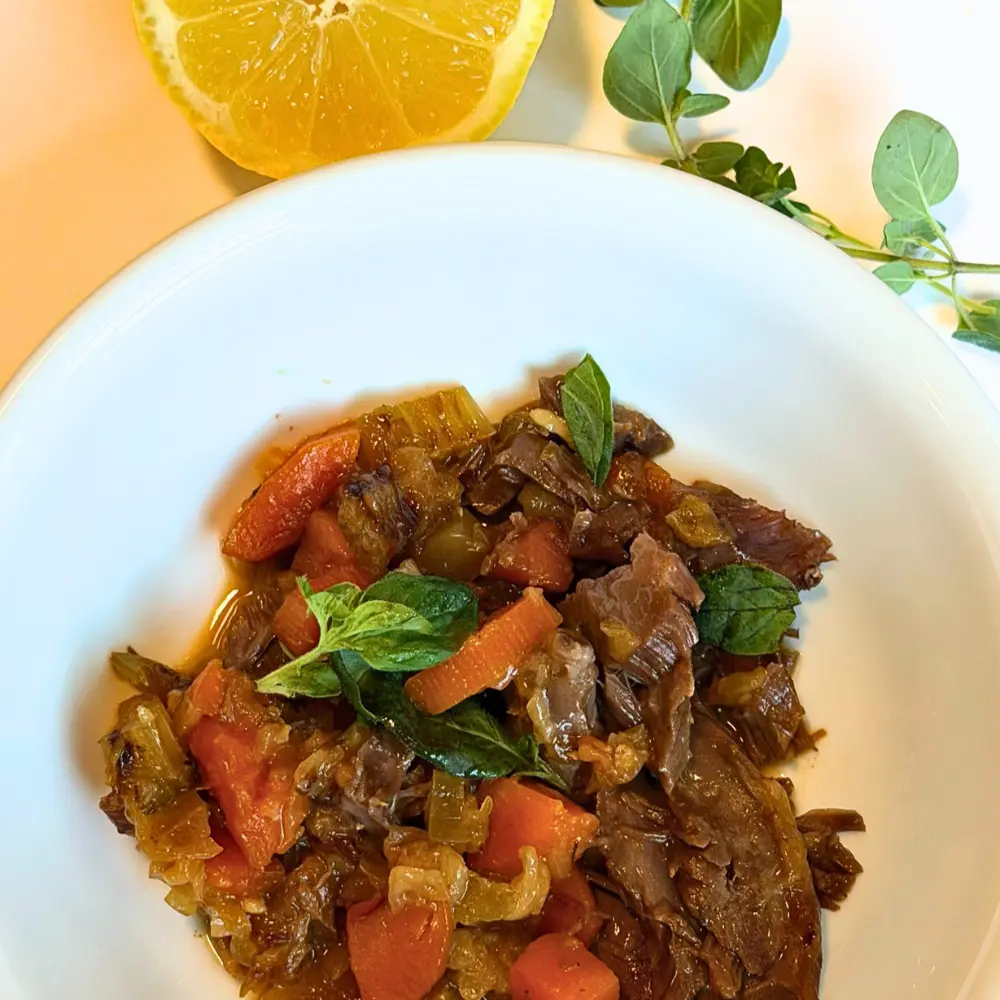
Slow-Cooked Lamb Shanks: The Modern Family Essential
Ingredients
Equipment
Method
- Sear: Pat the lamb shanks dry with a paper towel and season generously with salt and pepper. In a heavy-bottomed pot (Dutch oven), heat the olive oil over medium-high heat. Sear the shanks on all sides until deeply browned. Remove and set aside.
- Build the Foundation: In the same pot, add the onion, celery, and carrots. Sauté until softened. Add the cumin, coriander, and turmeric, stirring for 30 seconds to release the aromatics. Add the garlic and cook for another minute.
- Assemble: Arrange the vegetables as a "bed" at the bottom of the pot. Place the lamb shanks on top in a single layer, nesting them into the vegetables. If space is tight, it’s fine to arrange them at an angle or slightly overlapping.
- Slow Cook: Pour in the bone broth (or water), apple cider vinegar, and lemon zest until the liquid reaches 2/3 of the height of the meat. Sprinkle with the dried oregano. Bring to a gentle simmer over medium heat.
- Low and Slow: Reduce the heat to the lowest setting (use the smallest burner), cover tightly, and simmer for 3 to 3.5 hours. Avoid lifting the lid too often.
- Finish: 10 minutes before serving, stir in the fresh lemon juice. Taste and adjust seasoning if needed. Garnish with fresh herbs before serving.